


LiDAR
LiDAR ( Light Detection and Ranging) is a remote sensing technology that measures distance by illuminating a target with a laser and analyzing the reflected light.
ams as leading VCSEL Supplier
ams is the industry leader when it comes to VCSEL array power density, conversion efficiency and pitch
ams’ VCSEL manufacturing technology allows for great flexibility in layout design as number of pixels, their size and pitch, and common anode/ cathode vs. specific addressability patterns (row, column, section)
Leveraging 20 years of automotive experience (including ISO 26262), a significant footprint in 3D consumer electronics, and capabilities to co-develop emitter, current driver and optics.
LiDAR & Direct Time of Flight
LiDAR (Light Detection and Ranging) is a sensor technology for remote object detection and ranging, using a light source and receiver. Emitted light pulses hit objects, reflect, and return to the LiDAR sensor system where the receiver detects the returning light pulse.
The time between sending and receiving a light pulse is dependent on the distance between the LiDAR system and the object. Knowing time allows you to calculate distance. The most straightforward implementation of this principle is Direct Time of Flight (D-ToF). The system emits short pulses of Near Infrared light. A portion of that energy is returned and converted in distance and optionally intensity and ultimately speed. By taking many samples, it is possible to filter out noise (detected light not being a reflection of the emitted pulse).
Flash vs. Scan
A LiDAR system can observe the complete field of view (FOV) at once, called Flash systems. Flash typically works well for short to mid-range (0-100m), and by capturing the complete scene at once also objects with high relative speeds can be detected properly. Another implementation is to focus on a subset of the FOV, consequentially look at the next subsets, until the complete FOV is covered, called Scanning. Scanning can focus the light on the subset instead of the full FOV, and therefore can do object detection at a longer range compared to Flash.
As a scanner only takes one subset of the FOV, it needs some steering principle to move the light beam from subset to subset. Current systems typically use a mechanical beam steering principle; either by rotating the complete sensor head (spinning LiDAR), or using mechanical components inside the sensor (Polygon mirrors, MEMS mirrors). More and more industry players acknowledge the risk these mechanical parts fail and therefore look for beam steering principles without any moving parts, or true solid state.
VCSEL Light Source
ams supplies LiDAR systems with specific light sources, called VCSEL (Vertical Cavity Surface Emitting Laser). These VCSELs offer specific advantages over other types of light sources as for instance Edge Emitter Lasers:
A narrower wavelength bandwidth (especially over temperature) allows for more effective filtering at the receiver, resulting in improved signal to noise ratio.
Emitting a vertical cylindrical beam, the integration into the system is more straightforward.
As a VCSEL array typically comprises of 50-10k of individual emitters, the impact of a single emitter failure is much more limited compared to a typical EEL having just 1-3 emitters.
Do you know more about AMS's product uses, technical documents, and solutions related to LIDAR? Then quickly get in touch with AMS Distributor - NANHUANG!
 IC RFID TRANSP 860-960MHZ 16QFN
 IC TELECOM INTERFACE 28SOIC
 IC LINEAR SENSOR ARRAY 512X1
 IC RFID TRANSP 13.56MHZ 20QFN
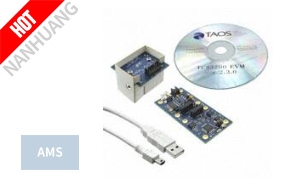 EVAL MODULE FOR TCS3200
 IC REG LINEAR 2.7V 200MA 6TDFN
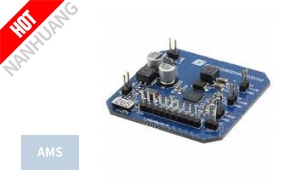 BOARD DEMO FOR AS8650
 SENSOR ANGLE 360DEG SMD
 IC DRVR 7 SEGMENT 8 DIGIT 24DIP
 RFID TAG R/W 13.56MHZ INLAY
 RF TX IC FSK 300-928MHZ 16VFQFN
 SENSOR OPT 940NM IR 8SOIC




- New Mira220 global shutter image sensor from ams OSRAM advances 2D and 3D sensing with high quantum
- New 514 nm laser diode from ams OSRAM provides small, low-cost alternative to argon-ion lasers
- Sensing in a new light as ams OSRAM shows its latest advanced optical technologies at electronica 20
- ams OSRAM makes UV-A/B/C radiation monitoring more affordable with launch of new high-sensitivity th
- ams OSRAM unveils Global Partner Network to stimulate innovation and accelerate customers’ design pr
- Higher luminosity, tighter beam, smaller form factor: ams OSRAM and Crytur technologies combined in
- Energous and ams OSRAM collaborate to develop wirelessly powered solutions for agricultural sensor a
- Quadric and ams OSRAM collaborate to bring intelligent image sensors demonstration to CES
- ams OSRAM releases industry leading 0.5Mpixel global shutter CMOS image sensors to save space and po
- Alexander Everke hands over ams OSRAM CEO position to Aldo Kamper
- New 256-channel ADC from ams OSRAM reduces power and design complexity in high-performance CT detect
- ams OSRAM and AIXTRON announce qualification of AIXTRON G5+ C and G10-AsP systems on 200mm wafers fo
